Blog
Longform notes on building — architecture, trade-offs, and what production taught me.
Series
Governing self-classified documents at scale
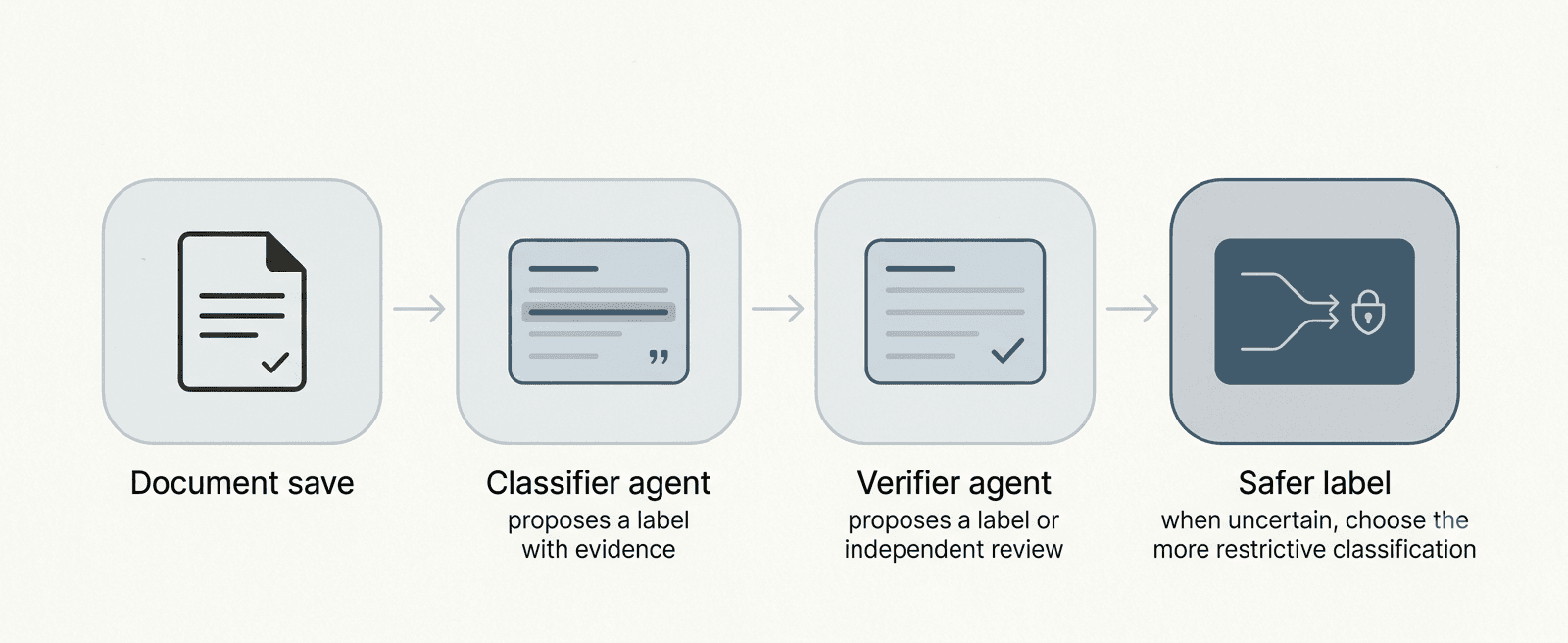
How a two-agent LLM system caught underclassified, sensitive financial documents before they became a security incident — and the design decisions that mattered more than the models themselves.
A case study in document classification governance. If you want the transferable lessons without the ML detail, start with the disclosure problem in Part 3 and the rollout metrics in Part 4.
- Applied ML
- Agentic systems
- Security/Governance
- Model distillation
- RLHF
- Part 1
The self-classification problem
A structurally unenforceable policy, systematic underclassification at thousands of documents a day, and why keyword matching was never going to close the gap.
- Part 2
A two-agent system, and the trade-off that shaped everything
Why one model wasn't enough, how classifier and verifier agents split the work, and the distillation and RLHF loops that kept cost and behavior in check.
- Part 3
The two problems that almost broke this
Grounding model claims in real document lines, and the paradox where the classification system itself became the disclosure it was meant to prevent.
- Part 4
Rollout, results, and what I'd change today
Phased deployment across three stages, an 85% reduction in underclassification, and what I'd rebuild differently with today's models.
Series
Building Trust into ML Pipelines: Governance, Audit, and Repeatability
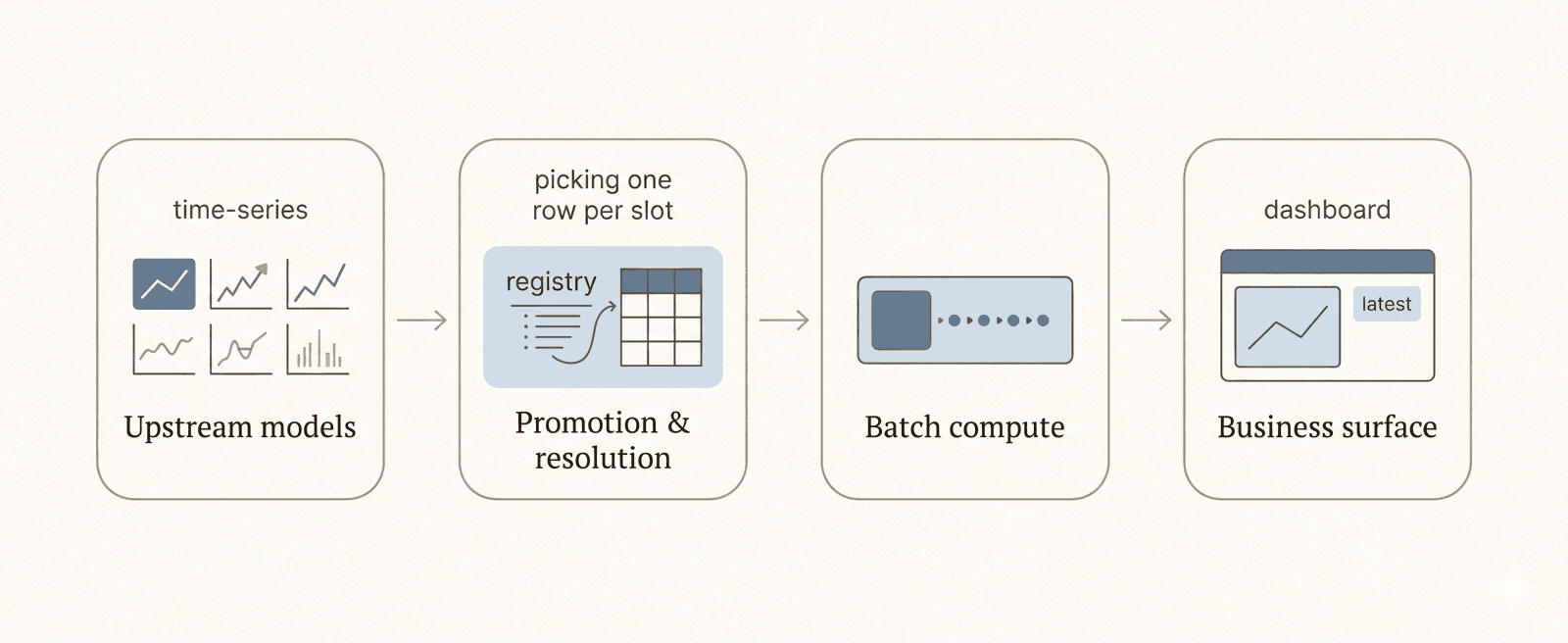
How a low-throughput ML rollup pipeline got trust, audit, and repeatability — patterns that transfer anywhere promoted outputs need a product surface.
A deep dive into one pipeline I built. If you want the pattern without the domain detail, start with the trade-offs in Part 2 and the risk tables in Part 4 and Part 5.
- Applied ML
- Pipeline design
- Orchestration
- Batch compute
- Object storage
- Part 1
When model outputs aren't enough
Promoted ML outputs without governance — no audit trail, no latest pointer, no repeatability. The systems problem behind holistic ROAS, told without assuming you care about marketing analytics.
- Part 2
Four layers, one contract
Resolver patterns, immutable taxonomy fields, and submit-time resolution — the orchestration design that turns a pile of promoted runs into one frozen batch input.
- Part 3
What we proved
Evidence from a full production compute chain — runtimes, artifacts, and the stakeholder moment where a 2.5-hour green run was mistaken for 'done.'
- Part 4
What's hard next
The remaining risk isn't batch failure — it's operational ambiguity: backfill, validation, rollback, and who owns the run button.
- Part 5
When the blocker moves upstream
Layer A and B shipped — and the remaining gate turned out to be upstream model promotion, not orchestration code.